Lawn Mowing in Hackbridge

Reliable lawn mowing in Hackbridge should leave turf neat, even and ready for day-to-day use, whether the space is a front garden, shared lawn, rental property or a larger domestic plot. Our service focuses on measured cutting, tidy edging and a finish that respects the shape of the lawn rather than simply reducing the height. We work with the main grass-cutting needs most customers want addressed: regular maintenance, one-off tidy-ups and planned seasonal care.
For many gardens, the main decision is not whether the grass needs cutting, but how to keep it in a condition that looks cared for without stressing the lawn. We cut to a suitable height, manage the finish around borders and paths, and can discuss how often the grass should be trimmed based on growth and use. If you are comparing options, our services overview gives a straightforward look at the work we offer across outdoor maintenance.
That approach is useful when the lawn has been left a little too long, when a property is being prepared for visitors, or when a regular routine has slipped and needs restarting. The aim is simple: a clean finish, clear edges and a lawn that feels easier to look after after the visit. If you want to arrange a quotation, the final section explains how to make an enquiry in a clear, practical way.
Regular Lawn Care and One-Off Cuts

Some lawns only need periodic attention, while others benefit from a more regular cut to maintain shape and density. We can help with recurring mowing for gardens that grow quickly in the warmer months, as well as one-off visits where the grass needs bringing back into order after a pause. The main value of a planned schedule is consistency: the lawn stays easier to manage, and the finish tends to remain more uniform from visit to visit.
Where useful, we can also keep the cut aligned with the condition of the grass rather than forcing it to a fixed look. Very long grass usually needs a more careful first pass, and lawns with uneven growth may need a gentler approach than a closely clipped finish. Good mowing is not only about height; it is also about not damaging the turf, avoiding rough patches and leaving the space suitable for normal use.
Alongside mowing, customers sometimes want broader garden help. When the lawn is only one part of the work, our garden maintenance page outlines a wider set of ongoing outdoor tasks, while the mowing page remains focused on grass cutting itself. That makes it easier to choose the level of support you need without over-ordering work that is not required.
What a Clean Mowing Finish Involves
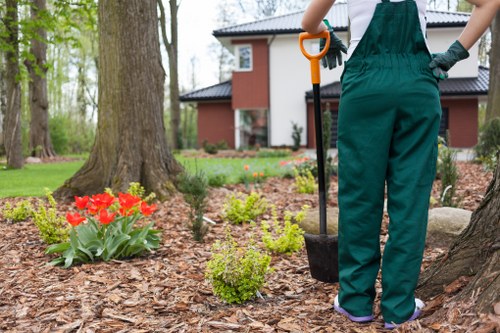
A tidy lawn finish usually depends on several small details working together. The cutting pattern should suit the shape of the garden, the edges need attention, and the lawn should be left without obvious missed strips or over-cut patches. On many properties, the difference between an average and a better result lies in the finish around corners, borders, fences and narrow sections where standard passes can leave the grass looking untidy.
Edging is often just as important as the cut itself. A lawn with trimmed margins looks more defined, especially where turf meets paving, gravel or planting beds. If the grass is encroaching on walks or paths, the edge can make the whole garden feel more ordered. Where appropriate, we can also discuss how to manage awkward areas so the lawn does not end up cut too short in one part and too long in another.
If you need a broader tidy-up beyond the grass, other garden tasks can be combined with mowing when they are relevant. For example, the garden clearance page covers situations where cuttings, overgrowth or unwanted material need to be dealt with as part of a larger outdoor clean-up. That can be useful when the lawn is only one part of a neglected garden that needs attention.
How We Approach Different Lawn Conditions
Not every lawn starts in the same state. Some are compact and well kept, while others have patchy growth, moisture-heavy sections or a build-up of longer grass at the edges. We adapt the mowing approach to the condition of the turf so the work remains sensible for the garden rather than purely mechanical. A lawn that has been neglected for a while usually benefits from a steadier first cut, then a more regular pattern afterwards.
In practical terms, that can mean choosing a suitable order of work, allowing for turns in tight corners, and making sure the finish is even where the lawn meets obstacles. When grass is long, the first priority is often control rather than speed. Once the lawn is back under management, it becomes easier to keep it in shape. That is especially helpful for homes with limited time for outdoor upkeep.
For customers who are looking beyond the grass itself, our lawn mowing page remains the clearest destination for this core service, while related pages help when mowing forms part of a larger outdoor project. If you are deciding whether your garden needs a simple cut or a more complete tidy, it is usually best to begin with the turf and then add only the extra work that genuinely adds value.
Supporting Work Around the Lawn

Many gardens benefit from a little extra work around the lawn edge once the grass has been cut. This may include tidying places where the lawn meets planting beds, coping with grass that has spread into borders, or dealing with adjoining hard surfaces that need a neater line. The detail matters because a lawn can look much better when its surroundings are also in order, even if the mowing itself is quite straightforward.
Where a garden includes hedging, overhanging growth or taller planting that affects access to the lawn, it may be sensible to plan the work together. Our hedge trimming page is useful if boundary growth needs shaping at the same time as the lawn is being cut, while tree lopping and removal may be relevant where heavier overgrowth is affecting light or access. These pages help separate different kinds of outdoor work so you can request only what is needed.
If the garden has a more general design or layout issue, some customers begin with mowing and then move on to larger improvements later. In those cases, the lawn service can sit alongside planning for new features or adjustments to the outdoor space, but the most immediate result still comes from a careful grass cut. The work is practical, visible and often the quickest way to restore order.
When the Lawn Is Part of a Larger Outdoor Project

Some customers contact us because mowing is only one part of an outdoor project. A lawn can be the centre of a garden, but it may sit within a wider scheme that includes paving, planting, edging or structural changes. In those situations, it helps to look at the grass as a separate task first so the mowing plan fits with the rest of the garden rather than competing with it. We can keep the mowing scope focused while still acknowledging the wider setting.
If your outdoor space is being improved more broadly, the landscape gardening page is a good place to understand how lawn care can sit alongside changes to the garden layout. For more substantial transformations, landscaping covers the wider service area. These pages are useful when the brief goes beyond maintenance and starts to involve reworking how the garden is used and enjoyed.
Even then, lawn mowing remains an important part of the finish. A newly improved outdoor space still benefits from regular grass cutting to keep the overall look coherent. If you are in the early stages of planning, you can start with the lawn and build from there. That keeps the scope manageable and avoids paying for work that does not match your current priorities. Please get in touch if you would like a quotation.
Planning a Quotation for Lawn Mowing
When asking for a quotation, it helps to give a clear description of the lawn and what you want done. Useful details usually include the size of the area, whether it is a one-off cut or ongoing maintenance, and whether there are features such as narrow access, uneven ground or awkward borders. A short description is often enough to start the conversation, and photos can be helpful where the garden layout is not easy to describe in words.
Another useful point is whether you want the work to stop at mowing or include related tidy-up tasks. For example, some customers only need the grass cut, while others want edging, light clearance or help with growth around boundaries. If you already know the kind of finish you prefer, say so plainly. That makes it easier to provide a quotation that reflects the work rather than a generic estimate.
For pricing context, the pricing and quotes page explains the route to requesting a figure, while the final step is to send your details and ask for a quotation in plain language. If you are ready, use the contact route that suits you best and tell us about the lawn, the access and the result you want.
Useful Information About Garden Care Choices
Choosing how to manage a lawn often comes down to balancing appearance, use and maintenance effort. Some people prefer a neat, close finish that keeps the garden looking sharp, while others want a slightly fuller cut that is easier on the grass in dry or changeable conditions. The right choice depends on the garden itself and how the space is used. A lawn that is walked on often may need a different approach from one that is mainly decorative.
It can also help to think about the rest of the garden when planning mowing. If trees, borders or hedges are affecting light and growth, the grass may need more frequent attention in some areas than others. If the garden is being refreshed after a long gap, a one-off tidy-up may be enough to reset the space before regular care begins. These are the kinds of decisions that shape the service and keep it practical.
For customers who want an ongoing relationship between lawn work and wider outdoor care, the about us page gives a general overview of the business background, while the service pages remain the clearest place to compare specific tasks. When you are ready to move forward, a concise enquiry is usually the quickest route to a suitable quotation.
About Hackbridge
Hackbridge is a district in the London Borough of Sutton, in south-west London, close to the boundary with Merton and linked closely with the River Wandle valley. The area grew significantly with suburban development in the nineteenth and early twentieth centuries, and its character still reflects a mix of residential streets, local routes and open spaces associated with the wider Wandle corridor. Hackbridge railway station sits on the Sutton Loop Line, giving the area an important transport connection to nearby town centres and central London. The River Wandle remains one of the most distinctive natural features in the locality, with a long history of mills and industry along its course, much of which shaped settlement patterns in south London. Today, the area combines housing, local shopping streets and accessible green spaces. Beddington Lane and the wider route network link Hackbridge with neighbouring communities, while nearby parks and open land provide room for walking and informal recreation. The modern built environment includes later housing, smaller commercial premises and infrastructure linked to regeneration in parts of the district. As with many parts of Sutton, Hackbridge sits between suburban calm and practical urban connections, with a landscape shaped by both transport and the historic river environment.
That local setting gives the area a recognisable character without making it a place of grand monuments or heavy tourism. Instead, it is defined by everyday movement, residential life and the presence of the river valley. The mix of streets and green edges means the district reads as part of London’s broader suburban fringe while still having its own identity. Local landmarks are often modest rather than ceremonial, but they contribute to a sense of place through the station, river corridor, nearby paths and neighbourhood streets that have developed over time. For anyone looking at Hackbridge on a map, its position in the south-western part of the borough, and its relationship to Sutton, Wallington and the Wandle, explain much of how it is understood.
Garden Services That Support a Neat Finish
Although mowing is the main focus here, some gardens need additional support to keep the overall finish looking tidy. If grass cuttings, seasonal debris or neglected areas are part of the problem, a practical clearance approach may be more suitable than mowing alone. Likewise, where the lawn is one element of a broader outdoor upkeep plan, combining tasks can help avoid repeated disruption and keep the garden manageable between visits.
The recycling and sustainability page may be useful if you want to understand how removed material is handled, while insurance and safety covers the approach to working carefully and responsibly. For customers who prefer to see the business policies before booking, those pages provide additional background without distracting from the core lawn care service. They can be especially helpful when comparing providers and deciding how the work should be carried out.
If you are ready to take the next step, use the contact route available on the site and request a quotation for your lawn. A short note about the size of the area, the condition of the grass and whether you want a single visit or ongoing mowing is usually enough to begin. Clear details make quoting easier, and they help make sure the service matches the garden.


